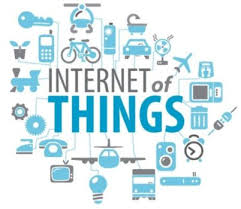
Overview
The course “Introduction to IoT: Concepts and Applications” provides a foundational understanding of Internet of Things technologies, including sensors, connectivity, and data processing. It explores real-world applications in smart homes, healthcare, and industry, enabling learners to design and analyze IoT-based solutions for modern technological challenges and emerging digital ecosystems.
Our Trainers

Mr. Aditya Desai
He is an IT Professional with vast experience in IoT and is training various studnets and Freshers in the same feild.
Modules
Week 1: Fundamentals of IoT
Module 1: Introduction to IoT
- Definition and Evolution of IoT
- Characteristics of IoT Systems
- IoT Ecosystem and Components
- IoT vs M2M (Machine-to-Machine)
Module 2: IoT Architecture
- 3-layer and 5-layer IoT Architecture
- Perception, Network, and Application Layers
- Cloud vs Edge Computing in IoT
- IoT Platforms Overview
Module 3: IoT Hardware Components
- Sensors (Temperature, Humidity, Motion)
- Actuators
- Microcontrollers (Arduino, Raspberry Pi basics)
- Embedded Systems Overview
Module 4: Communication Technologies
- Wired vs Wireless Communication
- Protocols: Wi-Fi, Bluetooth, Zigbee, RFID, NFC
- Introduction to MQTT, HTTP, CoAP
Practical / Lab (Week 1)
- Introduction to Arduino / Raspberry Pi
- Interfacing basic sensors (e.g., temperature sensor)
- Simple data acquisition and display
Week 2: IoT Applications and Implementation
Module 5: IoT Software & Data Handling
- IoT Software Stack
- Data Collection and Processing
- Cloud Integration (basic concepts)
- Introduction to IoT dashboards
-
Module 6: IoT Applications
- Smart Homes
- Smart Cities
- Healthcare (Wearables, Remote Monitoring)
- Industrial IoT (IIoT)
- Agriculture (Smart Farming)
-
Module 7: IoT Security & Challenges
- Security Issues in IoT
- Privacy Concerns
- Data Protection
- Challenges in Scalability and Interoperability
-
Module 8: Future Trends in IoT
- AI + IoT (AIoT)
- Edge Computing
- 5G and IoT
- Digital Twins
Practical / Lab (Week 2) - Build a simple IoT project (e.g., Smart Temperature Monitoring System)
- Sending sensor data to cloud (ThingSpeak or similar)
- Basic data visualization
Outcomes
After successful completion of the course, students will be able to:
| CO Code | Course Outcome Statement |
|---|---|
| CO1 | Explain the basic concepts, architecture, and working principles of IoT systems |
| CO2 | Identify and describe IoT components such as sensors, actuators, and embedded systems |
| CO3 | Analyze different communication protocols and technologies used in IoT |
| CO4 | Illustrate various real-world IoT applications and their impact across domains |
| CO5 | Design and implement a basic IoT system using simple hardware and software tools |