Agriculture is entering a new era driven by innovation, sustainability, and intelligent technologies. The two-week summer school, “FutureAg: Advancing Agriculture for Tomorrow,” is designed as a dynamic platform to explore the integration of modern agricultural sciences with emerging tools such as artificial intelligence (AI), precision farming, and data-driven decision-making. The program aims to equip students, researchers, and professionals with future-ready skills to address challenges related to food security, climate change, and resource management. Key themes include climate-smart agriculture, advanced plant breeding, seed science, digital agriculture, and AI-enabled crop management systems. Through expert lectures, hands-on training, field demonstrations, and interactive sessions, participants will gain practical exposure to innovative technologies shaping the future of farming. This summer school fosters interdisciplinary learning, critical thinking, and innovation, empowering participants to become leaders in transforming agriculture into a smart, sustainable, and resilient system for tomorrow.
Course
ModeOnline
Duration2 Weeks
Starts22 Jun 2026
Ends03 Jul 2026
Course Fee
₹1,000 /-
Registration Closed
About The Course
Overview
Agriculture is entering a new era driven by innovation, sustainability, and intelligent technologies. The two-week summer school, “FutureAg: Advancing Agriculture for Tomorrow,” is designed as a dynamic and interdisciplinary platform to explore the integration of modern agricultural sciences with emerging tools such as artificial intelligence (AI), precision farming, remote sensing, and data-driven decision-making. In an age where agriculture must respond to increasing global demands and environmental challenges, this program seeks to redefine how we approach farming, productivity, and sustainability.
The program aims to equip students, researchers, and professionals with future-ready skills to effectively address critical challenges related to food security, climate change, soil health, water resource management, and sustainable agricultural practices. It emphasizes the adoption of innovative and scalable solutions that enhance productivity while preserving ecological balance.
Key themes of the summer school include climate-smart agriculture, advanced plant breeding techniques, seed science and technology, digital agriculture, Internet of Things (IoT) in farming, and AI-enabled crop monitoring and management systems. Participants will also explore the role of big data analytics, drone technology, and automation in transforming traditional farming practices into smart agricultural systems.
Through a blend of expert lectures, hands-on training, field demonstrations, laboratory exposure, and interactive group sessions, participants will gain both theoretical understanding and practical experience with cutting-edge agricultural technologies. The program will also include case studies, problem-solving exercises, and collaborative projects to encourage innovation and real-world application of concepts.
Furthermore, the summer school will provide opportunities for interaction with industry experts, agricultural scientists, and policy professionals, offering insights into current trends, government initiatives, and entrepreneurial opportunities in the agriculture sector. Special focus will be given to developing leadership, critical thinking, and decision-making skills among participants.
Overall, this summer school fosters interdisciplinary learning, innovation, and a solution-oriented mindset, empowering participants to become future leaders in transforming agriculture into a smart, sustainable, resilient, and technology-driven system for tomorrow.
Learning Goals
Course Outcomes
CO1: Conceptual Understanding of Future Agriculture
Explain the principles of modern and digital agriculture, including the role of AI, IoT, and data-driven decision-making in enhancing agricultural productivity and sustainability.
CO2: Advanced Knowledge in Plant Breeding & Crop Improvement
Demonstrate understanding of conventional and modern crop improvement techniques such as marker-assisted selection, genomic selection, and gene editing for developing improved crop varieties.
CO3: Application of Crop Physiology in Stress Management
Analyze physiological mechanisms governing crop growth, development, and stress tolerance, and apply this knowledge to improve crop performance under changing climatic conditions.
CO4: Adoption of Climate-Smart Agronomic Practices
Evaluate and implement sustainable agronomic practices, including precision farming, conservation agriculture, and efficient resource management.
CO5: Soil Health and Nutrient Management Competency
Assess soil health parameters and recommend appropriate nutrient and soil management strategies for sustainable crop production.
CO6: Expertise in Horticultural and Protected Cultivation Systems
Apply advanced horticultural techniques, including protected cultivation, hydroponics, and post-harvest management, for high-value crop production.
CO7: Integrated and Smart Pest Management Skills
Develop effective pest management strategies using integrated approaches, including biological control and AI-based pest monitoring systems.
CO8: Understanding of Agricultural Engineering & Precision Technologies
Demonstrate knowledge of modern farm machinery, automation, drones, sensors, and precision agriculture tools for efficient farm operations.
CO9: Scientific Livestock and Poultry Management
Apply scientific principles in livestock and poultry production systems, including breeding, nutrition, health, and precision livestock farming.
CO10: Innovation, AI, and Agribusiness Development
Integrate AI tools and innovative approaches to develop sustainable agribusiness models, enhance market linkages, and promote entrepreneurship in agriculture.
Curriculum
Course / Modules
Module 1: Foundations of Future Agriculture & Digital Transformation
Module 9: Livestock & Poultry Management in Smart Farming
Module 10: AI, Agribusiness & Innovation in Agriculture
Learn From Experts
Our Trainers
Dr. Ashutosh Sawarkar
Dr. Ashutosh Sawarkar is currently serving as Assistant Professor and Head of the Department of Genetics and Plant Breeding at the School of Agricultu...
Dr. Abhinandan Yadav
Dr. Abhinandan Yadav is a highly motivated academician with a Ph.D. in Entomology, specializing in Integrated Pest Management and insect ecology. He p...
Dr. Atul Madhao Pradhan
Dr. Atul madhao Pradhan working as an Associate Professor in Genetics and Plant Breeding at School of Agriculture, Sanjeev Agrawal Global Ed...
Dr Laxmi Kant Sharma
Dr Laxmi Kant Sharma Ph D is scientist in field of Animal Science,after completion PG in Animal Husbandry from Rajasthan Agriculture University,Bikner...
Dr Kaushik Kumar Panigrahi
Dr. Kaushik Kumar Panigrahi (b. 1988) is currently serving as the Breeder and Officer-in-Charge (OIC) of the All-India Coordinated Research Network on...
Dr. Dinkar J Gaikwad
Dr. Dinkar Gaikwad is presently working as an Associate Professor and Head, Department of Crop Physiology and Biochemistry at M.S. Swaminathan School ...
Dr. Meena Yadav
Dr. Meena Yadav is an Assistant Professor (Agriculture) specialized in Soil Science at Sanjeev Agrawal Global Educational University, Bhopal, with 1.1...
Dr. Shani Kumar
Dr. Shani Kumar is Assistant Professor (Horticulture) Vegetable Science in Sanjeev Agrawal Global Educational University, Bhopal. He did his B.Sc. (Ho...
Dr. Anurag Patel
Dr. Anurag Patel, currently working as an Assistant Professor (Farm Machinery and Power Engineering) at School of Agriculture, Sanjeev Agrawal Global ...
Dr. Krishnendu Ray
A distinguished career in Agronomy is maintained by Dr. Krishnendu Ray, who currently serves as a Subject Matter Specialist at Sasya Shyamala Krishi V...
Dr. Ashutosh Sawarkar
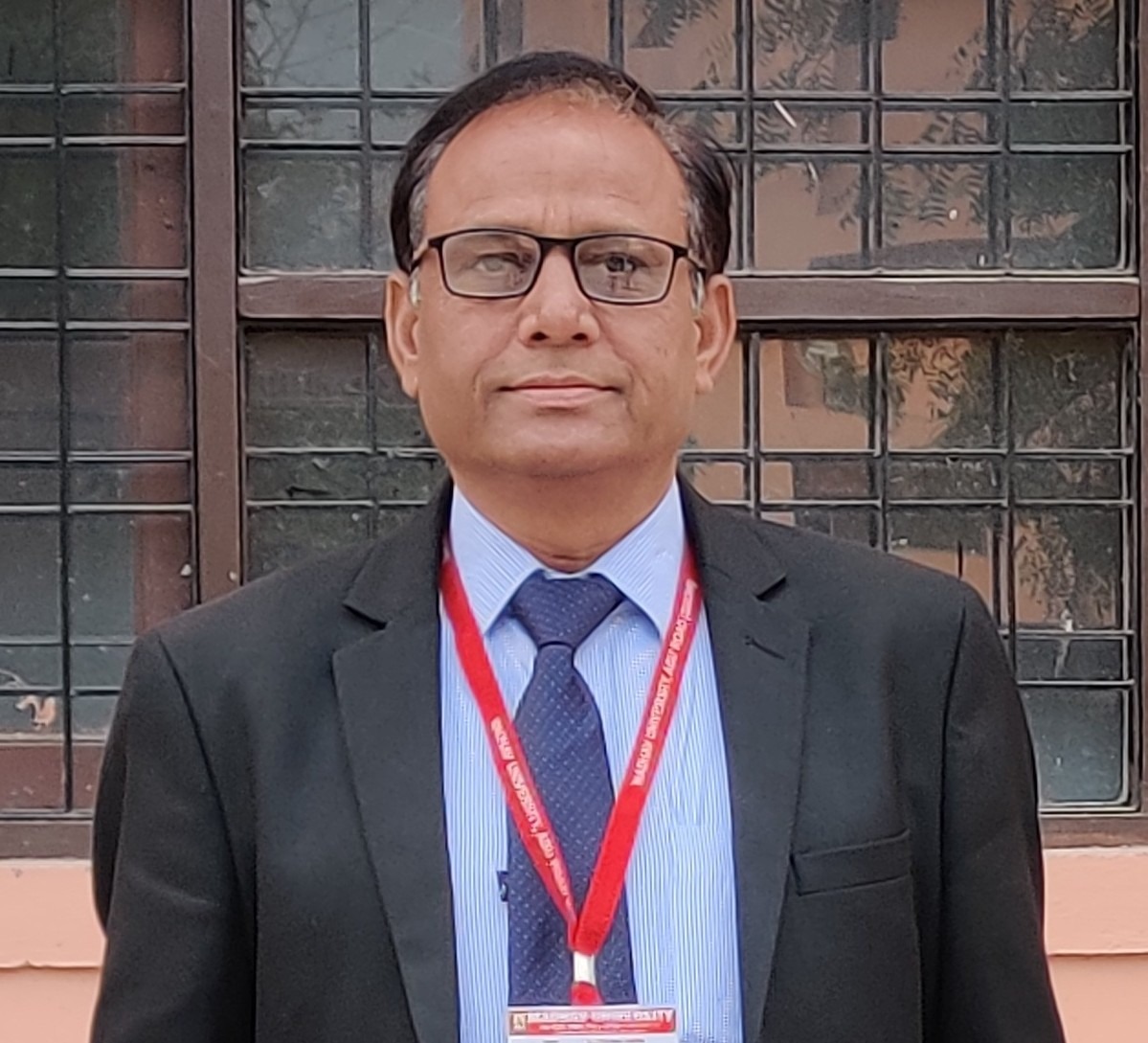
Dr. Ashutosh Sawarkar is currently serving as Assistant Professor and Head of the Department of Genetics and Plant Breeding at the School of Agriculture and Rural Development, Ramakrishna Mission Vivekananda Educational and Research Institute (RKMVERI), Narendrapur Campus, Kolkata. He obtained his Ph.D. in Plant Breeding from Bidhan Chandra Krishi Viswavidyalaya (BCKV), West Bengal, with research focused on inheritance for tolerance to moisture stress in tossa jute. His academic journey also includes an M.Sc. (Ag.) in Plant Breeding from BCKV and a B.Sc. (Ag.) from Dr. P.D.K.V., Akola, Maharashtra. Dr. Sawarkar’s research interests span heterosis breeding, stress breeding, and crop improvement in maize, mustard, mungbean, and jute. He has guided several M.Sc. and Ph.D. scholars and has published extensively in reputed national and international journals, alongside contributing book chapters and popular science articles. His research contributions on stress tolerance, genetic diversity, and varietal development in field crops are well recognized. He has been honored with the Best Young Researcher National Award (2018) and has qualified the ICAR-ASRB National Eligibility Test in Genetics and Plant Breeding. He has also delivered invited talks at national training programs and conferences and is actively involved in academic leadership roles, including curriculum development, examination committees, and quality assurance processes at RKMVERI. Dr. Sawarkar is a member of several professional societies, including the Indian Society of Plant Breeders and the Indian Society of Genetics and Plant Breeding. His academic and research career reflects a strong commitment to advancing plant breeding science and contributing to the upliftment of farmers through resilient crop improvement strategies.
Dr. Abhinandan Yadav
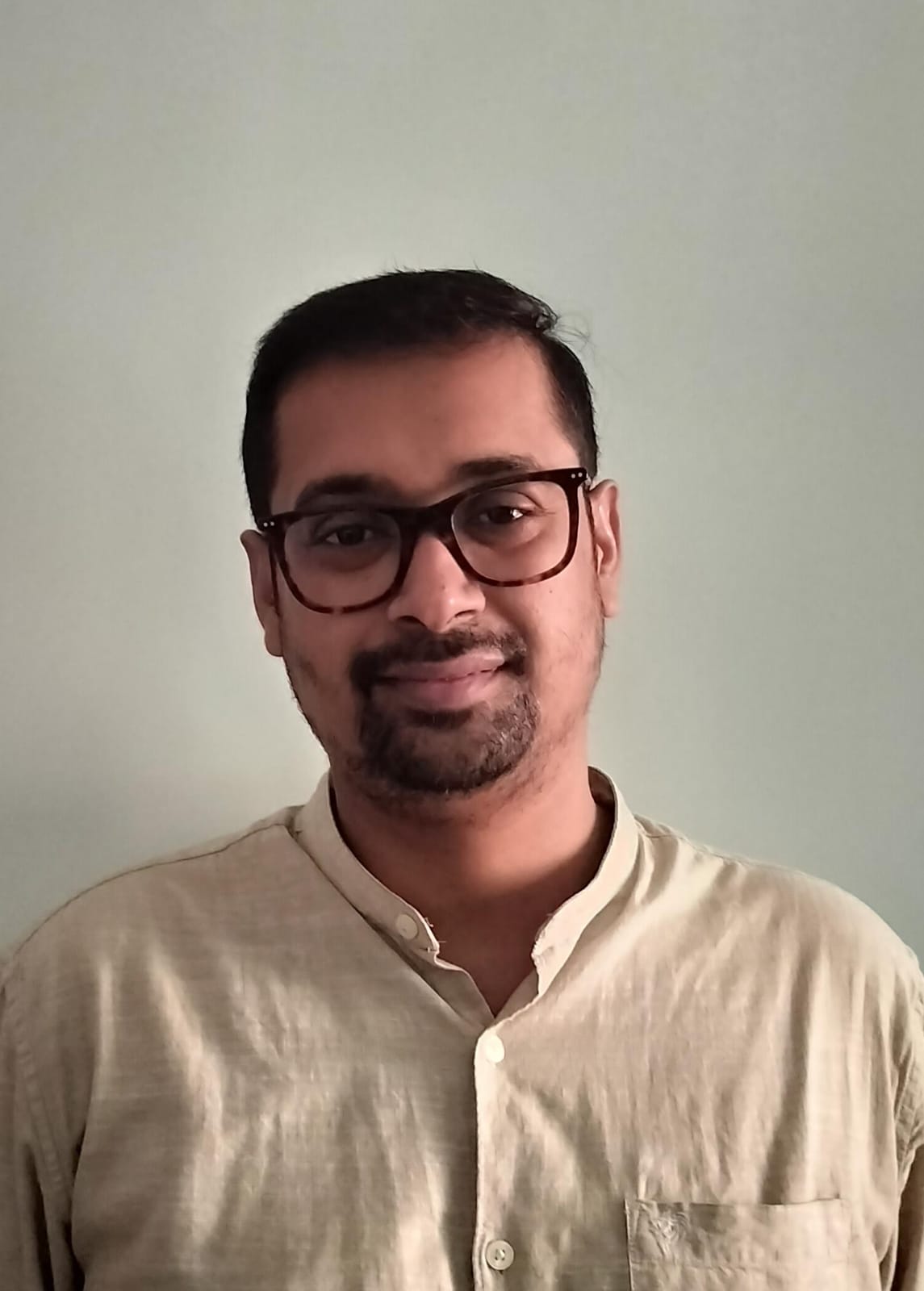
Dr. Abhinandan Yadav is a highly motivated academician with a Ph.D. in Entomology, specializing in Integrated Pest Management and insect ecology. He possesses strong teaching, research, and extension experience in agricultural sciences. He is skilled in delivering concept-based lectures, guiding students, and conducting practical field demonstrations. His research work includes pest management strategies and sustainable agriculture practices, supported by academic publications. He is committed to fostering critical thinking and innovation among students. Seeking a position as an Assistant Professor, he aims to contribute effectively to teaching, research, and institutional development in the field of agriculture.
Dr. Atul Madhao Pradhan
Dr. Atul madhao Pradhan working as an Associate Professor in Genetics and Plant Breeding at School of Agriculture, Sanjeev Agrawal Global Educational University, BHopal holding a Ph.D. in Genetics and Plant Breeding with postdoctoral experience in plant breeding. He has a strong academic foundation in Genetics and Plant Breeding and Seed Science and Technology, with expertise in crop improvement, genetic diversity analysis, and seed quality assessment. His work spans major crops such as wheat, potato, linseed, and pea, focusing on germination, vigour, and molecular characterization. He is actively integrate modern approaches such as genomics-assisted breeding, molecular markers, and AI-driven tools for data analysis, predictive breeding, and precision agriculture. With significant experience in teaching, research, and extension, his contribute]ion to academic excellence through conferences, training programs, and farmer-centric initiatives, promoting sustainable and technology-driven agricultural development.
Dr Laxmi Kant Sharma
Dr Laxmi Kant Sharma Ph D is scientist in field of Animal Science,after completion PG in Animal Husbandry from Rajasthan Agriculture University,Bikner he take admission for Ph D in Dr B.R. Ambedkar University,Agra. He has more than 25 years professional experience in area of animal husbandry. He has been also associated with CSWRI-Avikanagar (Jaipur) and MPUAT-Udaipur as a SRF in AICRP projects of ICAR, later on he has been worked as a senior dairy farm manager in AGSS (Miraj Group) Nathdwara (Udaipur) after it he has been worked as Assistant Professor in Madhav University,Abu Road (Sirohi). Currently, He is working as a Associate Professor in SAGE Univesity-Bhopal (MP). He has life time membership of various societies [i.e. Indian society of sheep and goat production and utilization (ISSGPU) and Indian society of animal production and management] He has been participated in many conferences in many conferences and seminars and presented research papers.
Dr Kaushik Kumar Panigrahi
Dr. Kaushik Kumar Panigrahi (b. 1988) is currently serving as the Breeder and Officer-in-Charge (OIC) of the All-India Coordinated Research Network on Potential Crops (AICRN on PC) and as Junior Breeder (I/c) under the All-India Coordinated Research Project on Sunflower at the Odisha University of Agriculture and Technology (OUAT), Bhubaneswar. Prior to joining the AICRN project, he had a long tenure at the College of Agriculture, Chiplima, OUAT, where he served as an Assistant Professor (Plant Breeding and Genetics). Hailing from the Balangir district of Odisha, Dr Panigrahi completed his B.Sc. (Agriculture) from OUAT, Bhubaneswar, in 2009, followed by a M.Sc. (Agriculture) in Plant Breeding from Bidhan Chandra Krishi Viswavidyalaya (BCKVV), Mohanpur, West Bengal, in 2011. He earned his Ph.D. in Agriculture (Plant Breeding and Genetics) from OUAT, Bhubaneswar, in 2014. During his M.Sc. programme at BCKVV, he was awarded the University Merit Scholarship. He demonstrated strong academic credentials by qualifying for the ASRB–NET examinations twice, in 2012 and 2014 and the ICAR–SRF in 2013. Dr Panigrahi has an impressive publication record, with more than 50 research articles in reputable national and international journals, 16 conference proceedings, and 12 book chapters. In addition, he has authored one book and five practical manuals for undergraduate students. With over eleven years of experience in teaching, research, and extension as an Assistant Professor, he has consistently demonstrated strong teaching skills and research competence. He has also served as a question setter and external examiner for M.Sc. (Ag.) and Ph.D. programmes at various agricultural universities. He actively mentors postgraduate and doctoral students and serves as Chairman and Member of Advisory Committees for students of Plant Breeding and Genetics and Agricultural Biotechnology at OUAT. His research expertise encompasses conventional and molecular breeding of sunflower, pulses, and potential crops, complemented by extensive experience in biostatistics and data analysis using RStudio and Python. As a young researcher, he broadened his international exposure through academic visits to the International Rice Research Institute (IRRI) in Los Baños, Philippines, in 2017 and 2022, and to the International Agricultural Training Centre in Israel, in 2018. Dr. Panigrahi is a life member of the Indian Society of Genetics and Plant Breeding (NASC, New Delhi) and the Indian Society of Plant Breeders (TNAU, Tamil Nadu). He has been the recipient of several honours, including the Young Scientist Award, Best Young Faculty, and Best Academician, at national and international seminars and conferences.
Dr. Dinkar J Gaikwad
Dr. Dinkar Gaikwad is presently working as an Associate Professor and Head, Department of Crop Physiology and Biochemistry at M.S. Swaminathan School of Agriculture, Centurion University of Technology and Management, Odisha. He is guiding two PhD students under his direct supervision. Till date, He has guided 18 M.Sc. Agriculture Students as a member of advisory committee. He is handling the courses like “Fundamentals of Crop Physiology” and “Environmental Science and Disaster Management” for the B.Sc. Agriculture Students.
Besides teaching, he has expertise in hydroponics farming. He has standardized nutrient recipes for different exotic crops like Lettuce, Pak-choi, and Kale. He has developed different hydroponics and aeroponics structures and commercial hydroponics farms at Centurion University. He is having international exposure in countries like Australia. He is also a key person in the ongoing Smart Agriculture Project by Centurion University in collaboration with Agricultural SEZ, Gabonese Govt at Gabon (Africa). He is also leading an underground project on hydroponics farming in Abu Dhabi. (The project is in its early stages.)
He has published a number of research and review articles in the journals of national and international repute. He has published many book chapters and two edited books on “Protected Cultivation and Smart Agriculture” and “Advances in Agricultural Technology”. He has two German utility patents, Two Indian design patents, and One UK design patent in his pocket.
Dr. Meena Yadav
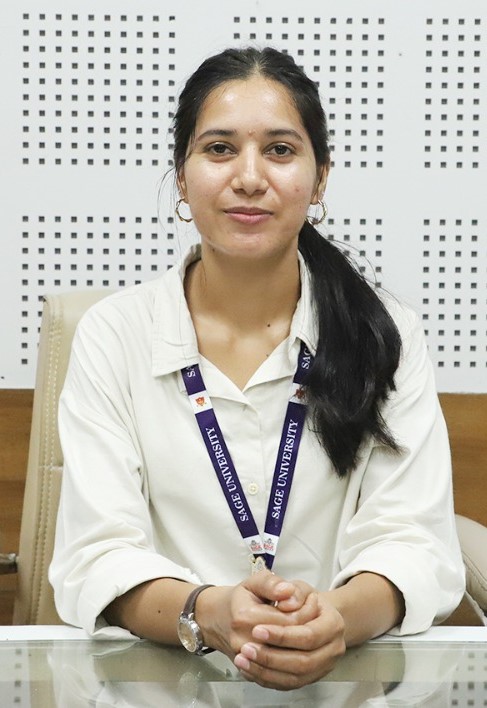
Dr. Meena Yadav is an Assistant Professor (Agriculture) specialized in Soil Science at Sanjeev Agrawal Global Educational University, Bhopal, with 1.11 years of teaching experience. She completed her B.Sc. (Hons.) in Agriculture from SKUAST-K, Wadura Campus, Sopore, Kashmir, and obtained both her M.Sc. and Ph.D. in Soil Science from SKUAST-Jammu. She has successfully qualified the ICAR-ASRB NET in Soil Science in 2019, 2021, and 2023. Dr. Yadav has published several research papers, book chapters, and articles in reputed national and international journals, contributing significantly to the field of soil science.
Dr. Shani Kumar
Dr. Shani Kumar is Assistant Professor (Horticulture) Vegetable Science in Sanjeev Agrawal Global Educational University, Bhopal. He did his B.Sc. (Hons.) Agriculture from ANDUA&T Kumarganj, Ayodhya. He has completed M.Sc. (Ag) Horticulture from Babasaheb Bhimrao Ambedkar University (A Central University), Lucknow and Ph.D. In Vegetable Science from ANDUA&T Kumarganj, Ayodhya. He has qualified ICAR-ASRB NET (2021 & 2023) in Vegetable Science. He has published various books, book chapters, research papers, review papers, practical manual and articles in national and international journals.
Dr. Anurag Patel
Dr. Anurag Patel, currently working as an Assistant Professor (Farm Machinery and Power Engineering) at School of Agriculture, Sanjeev Agrawal Global Educational (SAGE) University, Bhopal. His B. Tech (Agricultural Engineering) from Acharya Narendra Deva University of Agriculture and Technology (ANDUAT), Kumarganj, Ayodhya. M. Tech and Ph. D. (Farm Machinery and Power Engineering) from Sam Higginbottom University of Agriculture, Technology and Sciences, Prayagraj. I have published 20 research papers (National and International), 4 awards, 3 books, 10 book chapters, 1 copyright, 3 technical bulletins, 3 leaflets and pamphlets and 75 plus Articles (in Hindi and English).
Dr. Krishnendu Ray
A distinguished career in Agronomy is maintained by Dr. Krishnendu Ray, who currently serves as a Subject Matter Specialist at Sasya Shyamala Krishi Vigyan Kendra, RKMVERI. A Ph.D. in Agronomy was earned from Bidhan Chandra Krishi Viswavidyalaya in 2016, following a highly decorated academic path that included securing the 1st rank during M.Sc. studies. Professional excellence has been recognized through numerous prestigious accolades, including the International Plant Nutrition Institute (IPNI) Scholar Award and the Mosaic Company Foundation Award for outstanding doctoral research.
Extensive expertise in nutrient management, crop modeling, and greenhouse gas (GHG) estimation has been demonstrated through the publication of over 50 research papers and the development of the "AgriEdgeAs" decision support system. Technical proficiency is further highlighted by a Remote Pilot certificate for drone operations and the conceptualization of an agricultural Android application.
Significant contributions to agricultural extension and education have been made, including the guidance of 21 M.Sc. students and the coordination of 141 training programmes for farmers and rural youth. Leadership is also provided as a Nodal Officer for Cluster Frontline Demonstrations (CFLD) and as an editorial board member for international journals such as Frontiers in Agronomy. Scientific rigor is combined with practical impact through the management of 16 externally funded projects supported by organizations like ICAR and ACIAR.
Need Help?
Frequently Asked Questions
1. What is the objective of the “FutureAg: Advancing Agriculture for Tomorrow” Summer School?
2. Who can apply for this summer school?
3. What are the key topics covered in the program?
4. What is the duration of the summer school?
5. Will there be hands-on training?
6. Are experts and resource persons involved?
7. Will participants receive a certificate?
8. Is there any registration fee?
9. What are the expected outcomes of this program?
10. How will this program benefit students academically and professionally?
11. Will study materials be provided?
12. Is attendance mandatory?
13. How can I apply for the program?
14. Will accommodation be provided?
15. Is there any evaluation or assessment?