Overview
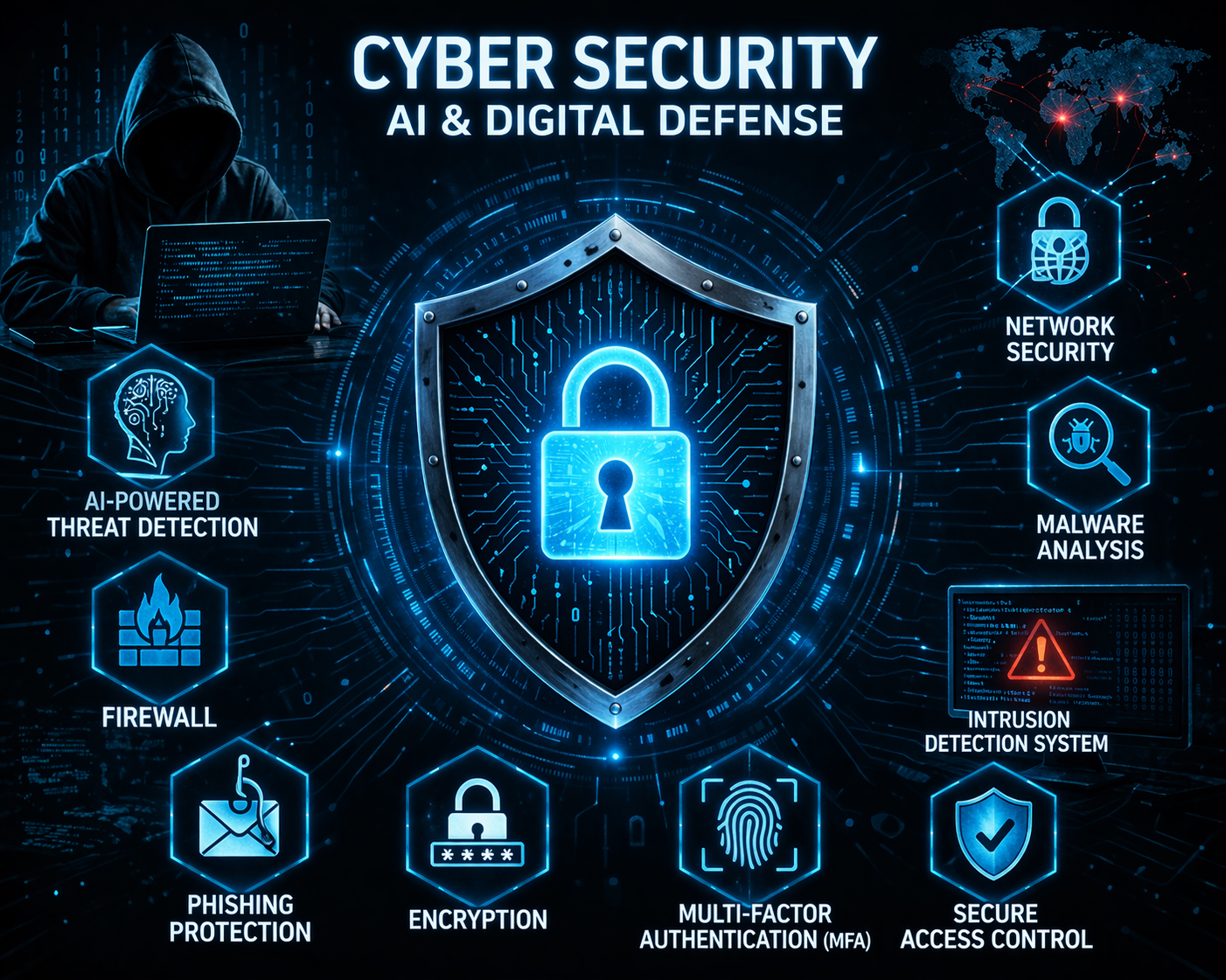
This short-term course introduces the basic concepts of Cyber Security, focusing on protecting systems, networks, and data from cyber threats. Students will learn about common attacks, security tools, safe practices, and real-world applications. By the end of the course, learners will understand how to identify risks and apply basic security measures
Our Trainers

Mr. Chatak Vajpai
Chatak Vajpai is a cyber security advisor who works with law enforcement authorities
around the world to help them solve complex cyber crime cases. He provides guidance
and advice to multiple state police departments on best practices for preventing,
detecting, and responding to cybercrime.
He has spent the last decade working in the fields of ethical hacking and cyber security.
He is currently the resource person of the Bureau of Police Research & Development
(BPR&D), assisting them in understanding the most recent developments in cyber
security and advising other government agencies on best practices, including the
Criminal Investigation Department (CID), the Central Academy of Police Training (CAPT),
the Internal Security Academy (ISA, CRPF), the Central Detective Training Institute (CDTI),
the Indian Air Force (IAF) and the Indian Army.
He is actively engaging in several Cyber Security related sessions and national police
conferences for officers from the Central Armed Police Forces and State Police Forces
across the country, including IGs, DIGs, Commandants, newly appointed DySPs,
Inspectors, and other higher rank officers.
Till now he has involved with more than 10 thousand government officials across the
nation and has published more than 850 articles in press and media.
Modules
Module 1: Introduction to Cyber Security (Day 1–2)
Topics Covered:
- What is Cyber Security
- Importance of Cyber Security
- CIA Triad (Confidentiality, Integrity, Availability)
- Types of Cyber Threats
Module 2: Types of Cyber Attacks (Day 3–4)
Topics Covered:
- Malware (Virus, Worm, Trojan)
- Phishing Attacks
- Ransomware
- DoS & DDoS Attacks
- Social Engineering
Module 3: Security Tools & Techniques (Day 5–7)
Topics Covered:
- Firewalls & Antivirus
- Encryption Basics
- Password Security
- VPN (Virtual Private Network)
- Multi-Factor Authentication
Module 4: Network & Web Security (Day 8–9)
Topics Covered:
- Network Security Basics
- Secure Browsing (HTTPS, SSL)
- Wi-Fi Security
- Web Security Risks
Module 5: Best Practices & Case Studies (Day 10–12)
Topics Covered:
- Cyber Hygiene Practices
- Strong Password Techniques
- Data Privacy & Protection
- Case Studies of Cyber Attacks
- Future of Cyber Security
Outcomes
Outcome:
1. Students understand basic concepts and importance of cyber security.
2. Students can identify common cyber attacks.
3. Students learn how to protect systems using tools and techniques.
4. Students understand how to secure networks and web usage.
5. Students apply best practices and learn from real-world examples.