Overview
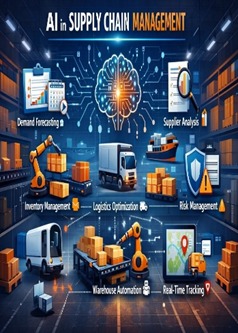
This intensive 1-week course is designed to provide a foundational understanding of how Artificial Intelligence (AI) is transforming supply chain management. The course explores the role of AI in key areas such as demand forecasting, inventory management, procurement, warehousing, and logistics.
Participants will learn how AI-driven tools and data analytics help organizations improve efficiency, reduce operational costs, and make faster, data-informed decisions. The course combines basic concepts with practical examples and case studies to demonstrate real-world applications of AI in supply chains.
Our Trainers

Anjali Uprit
QA with 2 years of experience. Strong skills in analyzing requirements, prepration of test scenario , test cases, execution of test cases, reporting bugs and tracking defects, regular updates to management and test closure report.
Modules
Day 1: Introduction to Supply Chain & AI
- Basics of Supply Chain Management (SCM)
- Key components: procurement, production, distribution
- Introduction to Artificial Intelligence in SCM
- Benefits and real-world applications of AI
Day 2: Data in Supply Chain & AI Fundamentals
- Importance of data in supply chain operations
- Types of data (historical, real-time, demand data)
- Basics of Machine Learning and AI models
- Data collection, cleaning, and preparation
Day 3: Demand Forecasting with AI
- Traditional vs AI-based forecasting
- Introduction to predictive analytics
- Using AI for demand planning
- Case studies on forecasting accuracy improvement
Day 4: Inventory & Warehouse Optimization
- Inventory management techniques
- AI for stock optimization and replenishment
- Smart warehousing and automation
- Reducing overstocking and stockouts
Day 5: Logistics & Transportation Optimization
- Role of AI in logistics and distribution
- Route optimization and delivery planning
- Real-time tracking and visibility
- AI in fleet and transportation management
Day 6: Risk Management & Decision-Making
- Supply chain risks and disruptions
- AI for risk prediction and mitigation
- Scenario analysis and decision support systems
- Ethical considerations in AI
Day 7: Project & Real-World Application
- Mini project (forecasting/logistics/inventory use case)
- Applying AI concepts to solve supply chain problems
- Presentation and discussion
- Course recap and assessment
Day 8: AI Tools & Technologies in Supply Chain
- Overview of popular AI tools and platforms
- Introduction to tools like Python basics, Excel AI features, and analytics software
- Hands-on demonstration of AI-based supply chain tools
- Understanding dashboards and real-time monitoring systems
Day 9: Industry Applications & Case Studies
- AI applications in retail, manufacturing, and e-commerce
- Case studies of companies using AI in supply chain
- Discussion on success stories and challenges
- Future trends in AI-driven supply chains
Day 10: Capstone Project & Evaluation
- Final project: solving a real-world supply chain problem using AI concepts
- Project presentation and evaluation
- Feedback and improvement suggestions
- Course wrap-up and certification guidance
Outcomes
1. Understand AI Integration in Excel
- Explain how AI enhances productivity in Excel
- Identify built-in AI features (like Ideas, Copilot, data insights)
2. Use AI Tools to Automate Tasks
- Automate repetitive tasks such as data cleaning and formatting
- Generate formulas using AI assistance instead of manual writing
3. Perform Smart Data Analysis
- Analyze datasets quickly using AI-powered suggestions
- Generate summaries, trends, and insights automatically
4. Create Advanced Formulas with AI Help
- Use AI to build complex formulas (e.g., IF, VLOOKUP/XLOOKUP, INDEX-MATCH)
- Debug and optimize formulas using AI suggestions
5. Generate Reports and Visualizations
- Create charts and dashboards with AI recommendations
- Automatically generate professional reports from raw data