Overview
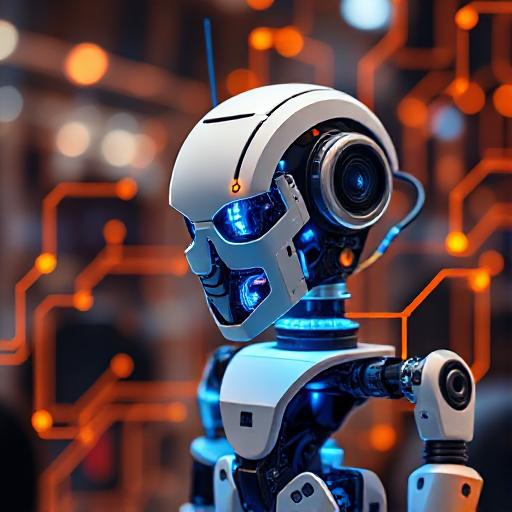
The course is based on IOT, Robotics & Mechatronics and these are the three distinct fields we cover. Starting from small boards to microcontrollers and large boards like Raspberry Pi we cover them all. Apart from components and sensors, we teach about commercial, agritech drones and rovers. Our latest use case is based on AI systems based drones and rovers.
Our Trainers

Siddhant Shaw
Siddhant Shaw
IoT, Robotics and Mechatronics Pioneer | AI & Drone Innovator | Tech Evangelist |5+Years Experience.
Siddhant Shaw is a visionary technologist specializing in IoT, Robotics, Mechatronics, Drones, and AI. With a passion for innovation, he has been at the forefront of designing and architecting IoT-Cloud-based solutions, developing AI-driven drones, and creating ready-to-sell technological solutions that address real-world challenges.
As a skilled designer and 3D printing expert, Siddhant excels in building cutting-edge prototypes that integrate hardware and AI, bridging the gap between automation and human-centric applications. His work focuses on autonomous systems, intelligent drone applications, and next-generation robotics, pushing the boundaries of what's possible in these domains.
A dedicated mentor and educator, Siddhant has trained and guided over 1,500+ students, empowering them with knowledge and hands-on experience in IoT, AI, and drone technology. His efforts in fostering the next generation of tech innovators have made him a highly sought-after speaker and trainer.
Recognized for his contributions, Siddhant was awarded the IEEE Best Project Award in 2024, a testament to his impact in the field of IoT and AI-driven robotics. His ability to combine technology, business acumen, and mentorship makes him an influential leader in the emerging tech space.
Whether speaking on smart automation, drone intelligence, or AI-powered robotics, Siddhant is dedicated to advancing innovation, mentoring young minds, and delivering impactful solutions to modern societal challenges.
Modules
| Day | Topic | Description | Time | Outcome |
| 1 | IoT Magic: Control Your World | Introduction to IoT and smart home automation (lights, voice assistants) and explain how IoT connects everyday objects. | 1-1.5 hour | Students see IoT’s relevance and imagine automating their own spaces. |
| 2 | Sensors and Modules: Give life to IoT | Introduction to sensors, how sensors are embedded in IoT systems. | 1-1.5 hour | Students learn about sensors and modules and how each of them are used in real-time scenarios. |
| 3 | Sensors Alive! Temperature & IoT | Use a DHT11 sensor to measure room temperature and display it on a screen, use a ultrasonic sensor to detect objects. Explain sensor roles in IoT systems. | 1-1.5 hour | First taste of IoT coding—students feel empowered to build more. |
| 4 | IoT based Weather Station | Hands-on: Combine multiple sensors to create a local weather station. | 1-1.5 hour | Students link physical sensors to data—teases environmental monitoring projects. |
| 5 | Cloud Connect: Send Data to Blynk/Arduino Cloud | Show how ESP32 sends sensor data to Blynk/Arduino Cloud. Display real-time graphs. Tease cloud analytics. | 1-1.5 hour | Students visualize IoT’s scalability and crave cloud integration skills. |
| 6 | ESP communication protocol | Demo peer-to-peer communication between independent devices. | 1.5-2 hour | Students grasp IoT communication and learn about master-worker communication. |
| 7 | Drones & IoT: Sky-High Data | Demo a drone with a temperature sensor streaming data. Discuss farming/surveillance use cases. | 1.5-2 hour | Links IoT to cutting-edge tech—students dream of drone projects. |
| 8 | AI on a $5 Chip: Anomaly Detection | Use TensorFlow Lite on ESP32 to detect abnormal sensor readings (e.g., sudden temp spikes). | 1.5-2 hour | Students see AI’s power in IoT and ask, “What else can tiny devices do?” |
| 9 | 3D Print Your IoT Gadget | Design and print a simple sensor enclosure using TinkerCAD. Show how prototyping accelerates IoT development. | 1.5-2 hour | Merges creativity with tech—students want to build custom IoT devices. |
| 10 | Medical IoT: measuring heart rate | Build your own heart rate monitoring system. | 1.5-2 hour | Students leave inspired, realizing they learnt about medical implementation of IoT devices |
Outcomes
By the end of this course, students will develop following Skills :
1.Students see IoT’s relevance and imagine automating their own spaces.
2.Students learn about sensors and modules and how each of them are used in real-time scenarios.
3.First taste of IoT coding—students feel empowered to build more.
4.Students link physical sensors to data—teases environmental monitoring projects.
5.Students visualize IoT’s scalability and crave cloud integration skills.
6.Students grasp IoT communication and learn about master-worker communication.
7.Links IoT to cutting-edge tech—students dream of drone projects.
8.Students see AI’s power in IoT and ask, “What else can tiny devices do?”
9.Merges creativity with tech—students want to build custom IoT devices.
10.Students leave inspired, realizing they learnt about medical implementation of IoT devices
Contact
Name: Rahul Khare
Mobile No: 9713692934